An office copier or multifunction printer you own is a depreciating asset, and the ATO sets its effective life at five years. If your business turns over less than $10 million and the machine costs less than $20,000, you can generally deduct the whole cost in the year it is first used, under the instant asset write-off. Otherwise you claim its decline in value each year. If you lease the machine instead, the lease payments are generally deductible as they are incurred. For a one or two machine office, the difference is mostly timing, so cash flow and service usually decide it.
General information only
Axia Office is a print provider, and this page is general information that does not take your circumstances into account. The figures are as published by the ATO at September 2026, with links to each source. Confirm how they apply to your business with your accountant before acting.
Leasing or buying a photocopier: the tax difference for a small office
Take a two-person practice replacing its only printer. The choice is whether to hold a contract for the use of a machine, or to own the machine as a business asset. The tax follows from that.
| Leasing | Buying | |
|---|---|---|
| What you hold | A contract for the use of the machine | The machine, as a business asset |
| How the cost is claimed | Generally as an operating expense, as the payments are incurred | In full under the instant asset write-off if eligible; otherwise the small business pool or depreciation over five years |
| Cash | No capital outlay; a known monthly figure across the term | The full price upfront, or financed separately |
| When the machine ages | Under an operating lease it usually goes back at the end of the term, and you move to a new one | It is yours to replace, sell or scrap |
| At disposal | Nothing to adjust | A balancing adjustment against the machine's tax value |
Cash flow is often the deciding factor at this size. A capital outlay competes with everything else the business needs money for that quarter, while a monthly figure spreads the cost across the term. The tax difference sits alongside that decision.
Leasing an office printer: the tax benefits and how payments are claimed
With an operating lease, the machine stays with the lessor or finance company. Lease payments for a printer used in the business are generally deductible as an operating expense in the income year they are incurred, so the deduction follows the payments across the term and there is no asset to depreciate. If the printer is also used privately, only the business portion counts.
Some finance is not a lease in the tax sense. A hire purchase agreement is generally treated as a purchase financed by a loan, so the business holds the machine as its asset, claims its decline in value, and claims the interest. The name on the paperwork does not settle how it is treated, so the agreement itself is what your tax adviser needs to see.
If you buy: the instant asset write-off
If you buy the machine, this is usually the rule that matters most for a small business. On 4 September 2026 the ATO confirmed that, from 1 July 2026, the $20,000 instant asset write-off is permanent. With an aggregated annual turnover under $10 million, you can generally claim an immediate deduction for the business portion of an eligible asset costing less than $20,000, in the income year it is first used or installed ready for use. The limit applies to each asset, and for a GST-registered business it applies to the cost after the GST credit. It applies to machines you hold as your own asset, whether bought outright or on finance such as hire purchase.
A machine costing $20,000 or more can go into the small business pool, depreciated at 15% in the first year and 30% each year after. The ATO sets out the eligibility rules and exclusions.
The ATO effective life of a copier or multifunction printer
The effective life is how long the ATO treats an asset as lasting for depreciation purposes. The Commissioner's current figures are in the Income Tax Assessment (Effective Life of Depreciating Assets) Determination 2025, which replaced the earlier tax ruling tables. Under office machines and equipment it lists:
| Office equipment | Effective life | Prime cost rate | Diminishing value rate |
|---|---|---|---|
| Photo copying machines | 5 years | 20% | 40% |
| Multi function machines (fax, copy, print and scan) | 5 years | 20% | 40% |
The rates follow from the effective life: prime cost is 100% divided by it, and diminishing value is 200% divided by it. You can also work out your own effective life for an asset if you can support it. A single-function printer is not listed under office machines, so check its effective life with the ATO's depreciation and capital allowances tool.
The prime cost method and the diminishing value method
These apply to a machine that is not written off in full and is not in the small business pool, for example where the business is outside the simplified rules. The choice is made per asset.
- Prime cost method. The same share of the cost each year: cost × (days held ÷ 365) × (100% ÷ effective life). On a five-year effective life, that is 20% of the cost for each full year.
- Diminishing value method. A share of the remaining value each year: base value × (days held ÷ 365) × (200% ÷ effective life). On a five-year effective life, that is 40% of the remaining value, so roughly 40% of the cost in the first full year, 24% in the second and 14.4% in the third.
Diminishing value brings the deduction forward; prime cost spreads it evenly. The cost includes delivery and installation, and the claim starts on the day the machine is first used or installed ready for use. The ATO explains both methods.
Machine first, structure second
The specification comes before the tax treatment
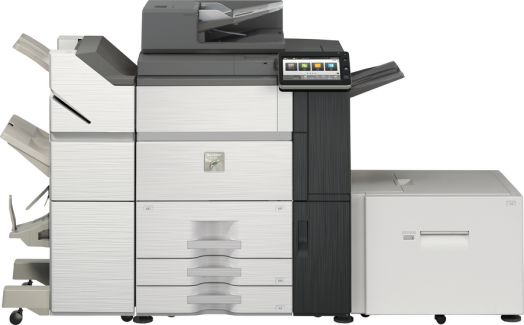
Volume, paper size and finishing decide which machine fits, whether it ends up leased or owned. Settle the specification first, then the structure. The two decisions can happen at different times.
Selling or scrapping a machine you own
When an owned machine is sold or scrapped, its sale value is compared with its adjustable value, the tax value left after the deductions claimed. The difference is a balancing adjustment, either assessable income or a further deduction. A machine written off in full under the instant asset write-off has an adjustable value of nil, so whatever you sell it for is generally assessable income. Disposal also means clearing any data held on the device, covered in office print security.
How the three agreements sit for tax
We offer three agreement types. In each, where the agreement does not make the machine your asset, the monthly payments are generally deductible as an operating expense as they are incurred, and there is nothing to depreciate. Where you become the buyer on finance, such as hire purchase, the treatment differs.
- Standard lease plus service. The hardware sits on flexible lease terms, with the service agreement held separately, so the lease payments and the service charges appear as two expense lines.
- Managed print. Managed print services is a service agreement with the hardware inside it, billed at a fixed cost per page, so the charge follows the pages printed.
- Unlimited print. The Unlimited Print Plan is also a service agreement with the hardware inside it, billed at one flat monthly rate.
Most of our agreements run 36 to 60 months. If buying outright suits your position, that can be looked at too. What should be written into any agreement is in printer lease contract terms.
GST and the records to keep
For a GST-registered business, the GST credit on a lease or service agreement is generally claimed on each payment in the period it falls; on a purchase, the credit on the full price is claimed in the period you buy. For an owned machine, keep the tax invoice, the date it was first used or installed, the method used and each year's claim, and keep the records for five years after the last one.
Owning it outright
Yours to replace when it no longer fits
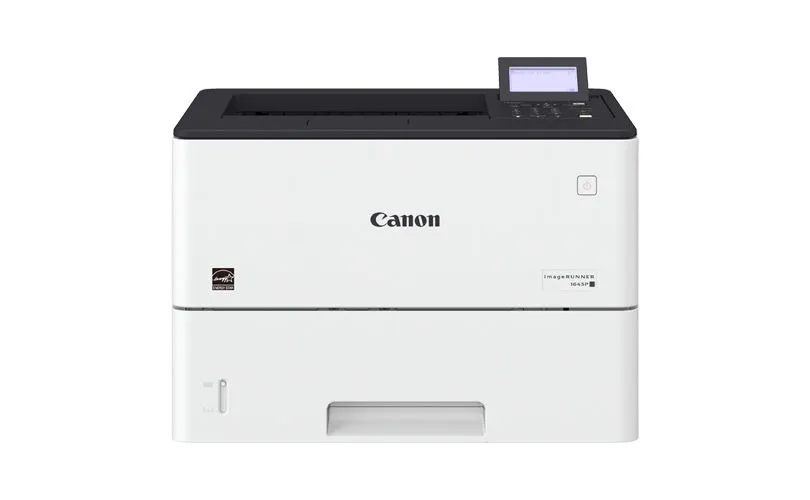
An owned machine is yours when the office outgrows it: you sell or scrap it, clear its data and account for the balancing adjustment. Under an operating lease, the machine usually goes back at the end of the term.
What usually decides it
For the practice replacing its only printer, the tax usually changes when the deduction lands more than how large it is. The choice tends to come down to three questions. Can the business spare the capital this quarter? Who should carry the machine when it stops fitting the office? Is service bundled, so one call fixes it?
Downtime and admin time can cost more than the difference between the two tax treatments, and neither appears on a quote. They are set out in the total cost of owning an office printer or photocopier. When the machine stops fitting the office, the next step is covered in upgrading a leased printer mid-contract. Your accountant can confirm the tax side for your business.
Getting the quote built on the right structure
If your accountant prefers one structure, tell us before the quote is built. It is easier to quote the right agreement than to restructure one later, and the machine specification is the same either way.
With us you get the same person every time. We have run Axia from Frenchs Forest since 1996 with our own technicians. Faults are fixed in hours, not days: 3.2 hours on average, with emergency response across Sydney metro under four hours, and we have over 90% customer retention. Mid-term on another agreement? We can pay out your existing contract. The hardware runs across the Canon range and the Sharp range, and the specification questions worth settling alongside the structure are in colour or monochrome and the questions to ask a photocopier provider before you sign.
Frequently asked questions
How does ATO depreciation work for office printers and copiers in Australia?
A copier or multifunction printer you own is a depreciating asset with a five-year effective life. A small business with turnover under $10 million can generally deduct one costing less than $20,000 in full in the year it is first used. Otherwise a machine of $20,000 or more can go into the small business pool, at 15% in the first year and 30% after, and a business outside the simplified rules claims the decline in value each year: 20% of the cost under the prime cost method, or 40% of the remaining value under the diminishing value method.
Can leasing an office printer help my Australian business with tax deductions?
Yes, in the sense that lease payments for a printer used in the business are generally deductible as an operating expense as they are incurred, with no asset to depreciate. Buying can bring the whole deduction into one year through the instant asset write-off, so the two differ mainly in timing.
How does ATO depreciation for office equipment work?
You claim the decline in value of an owned asset over its effective life, starting on the day it is first used or installed ready for use, using the prime cost or diminishing value method. Small businesses with turnover under $10 million can instead deduct eligible assets costing less than $20,000 immediately, and pool the rest at 15% then 30%.
What is the ATO depreciation rate for office furniture?
It depends on the item. Under the ATO's 2025 determination, freestanding office chairs and general tables have a 10-year effective life, which is 10% a year prime cost or 20% diminishing value. Desks and workstations have a 20-year effective life, which is 5% prime cost or 10% diminishing value.
What are the current ATO depreciation rates for office equipment?
For photocopying machines and multifunction machines, the effective life is five years, so the rate is 20% a year under the prime cost method or 40% of the remaining value under the diminishing value method. Other office machines vary: shredders, for example, have a 15-year effective life.
How do you depreciate equipment on taxes?
Work out the cost, including delivery and installation. Check whether the instant asset write-off applies. If it does not, choose the prime cost or diminishing value method, apply the effective life, and claim the decline in value each year for the days you held it. Keep a record of each year's claim, and make a balancing adjustment when you sell or scrap the asset.
Can I claim the instant asset write-off on a photocopier?
If the machine is your own asset, bought outright or on finance such as hire purchase, your aggregated turnover is under $10 million and it costs less than $20,000, generally yes, in the year it is first used or installed ready for use. It does not apply to lease payments, which are deducted as they are incurred.
Is it better to lease or buy a photocopier for tax purposes?
Neither is better in every case. Buying can bring the deduction forward through the instant asset write-off; leasing spreads it across the term with no capital outlay. At typical office machine values the difference is rarely large enough to decide it alone.
Know which structure you want? We will quote it that way
Tell us whether you want a lease with service held separately or a service agreement with the hardware inside it, and the quote comes back built on that structure.
Get your quoteAxia Office · Unit 6, 14 Rodborough Rd, Frenchs Forest
NSW 2086
(02) 9975 0888